
Decontamination of Heavy Metals Processes, Mechanisms, and Applications By Jiaping Paul Chen (very informative)
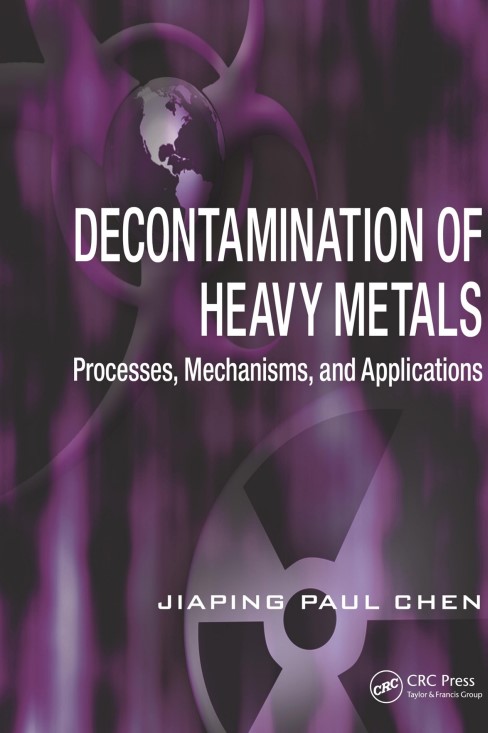
Summary of Decontamination of Heavy Metals Processes, Mechanisms, and Applications By Jiaping Paul Chen
Authors of: Decontamination of Heavy Metals Processes, Mechanisms, and Applications By Jiaping Paul Chen
Jiaping Paul Chen
📘 Buy the Complete Book on Amazon

Book Introduction / Overview
Decontamination of Heavy Metals: Processes, Mechanisms, and Applications by Jiaping Paul Chen is an essential guide for chemistry students seeking to master environmental and inorganic chemistry concepts. Covering heavy metal removal processes, reaction mechanisms, and practical applications, this book simplifies complex topics for exam preparation and concept building. Packed with clear explanations, study tips, and illustrative examples, it helps learners strengthen their analytical and physical chemistry understanding while tackling challenging inorganic chemistry problems effectively. Ideal for students aiming to excel in exams and real-world applications.
Short Summary
Decontamination of Heavy Metals: Processes, Mechanisms, and Applications by Jiaping Paul Chen is a comprehensive learning guide for students aiming to understand the complex world of inorganic and environmental chemistry. This book dives deep into the processes and reaction mechanisms involved in removing heavy metals from water, soil, and industrial systems, presenting them in a clear, student-friendly way. Designed for learners preparing for exams, it offers practical study tricks, step-by-step explanations, and illustrative examples that simplify challenging concepts in analytical, physical, and inorganic chemistry.
Whether you’re revising for exams or looking to strengthen your understanding of reaction pathways and decontamination techniques, this guide balances theory with real-world applications. The book emphasizes how different chemical processes interact, helping students connect core inorganic chemistry principles with practical environmental solutions. With its focus on exam preparation, concept clarity, and effective study strategies, it is an ideal resource for undergraduate and graduate students who want to excel in inorganic and analytical chemistry topics while building a solid foundation for advanced research or professional practice.
Key Points – Decontamination of Heavy Metals Processes, Mechanisms, and Applications By Jiaping Paul Chen
- Comprehensive Coverage of Inorganic and Analytical Chemistry – Explores heavy metal removal processes, reaction mechanisms, and applications, helping students link theory with real-world environmental chemistry problems.
- Concept-Based Learning Approach – Breaks down complex mechanisms into clear, step-by-step explanations, making inorganic and physical chemistry topics easier to understand and retain.
- Structured for Exam Preparation – Organized chapters with summaries, key points, and practice insights provide a focused roadmap for students preparing for exams in chemistry courses.
- Study Tricks and Learning Tips – Offers practical strategies for memorizing reactions, understanding mechanisms, and applying concepts effectively, enhancing retention and performance.
- Integration of Theory and Practice – Combines fundamental chemical principles with real-world applications of heavy metal decontamination, bridging classroom learning with practical scenarios.
- Illustrative Examples and Visual Aids – Uses diagrams, charts, and reaction schemes to simplify complex processes, aiding both visual and analytical learners.
- Supports Multidisciplinary Understanding – Helps students strengthen knowledge across inorganic, analytical, and physical chemistry while appreciating environmental and industrial applications.
- Advanced-Level Resource – Ideal for graduate and advanced-level students seeking a deep, exam-focused study guide that emphasizes clarity, concept mastery, and practical relevance.
Why It’s a Good Resource Book for Students
“Decontamination of Heavy Metals: Processes, Mechanisms, and Applications” by Jiaping Paul Chen is an essential learning resource that simplifies complex inorganic and analytical chemistry topics through clear explanations, concept-based learning, and illustrative reaction mechanisms, making it ideal for mastering core principles. Packed with practical study tricks and exam preparation strategies, this study guide helps undergraduate, graduate, and advanced-level students strengthen their conceptual understanding while efficiently tackling challenging chemistry problems.
For a deeper understanding of heavy metal decontamination processes, reaction mechanisms, and practical applications in inorganic and analytical chemistry, explore our comprehensive learning resources on Environmental and Inorganic Chemistry at UOCS.org.
Table of Contents in Decontamination of Heavy Metals Processes, Mechanisms, and Applications By Jiaping Paul Chen
Section I: Fundamentals of Heavy Metal Contamination
- Occurrence and Importance of Heavy Metal Contamination
• Introduction
• Economy and Metals
• Environmental Importance
• Toxicity of Heavy Metals
• Guidelines and Standards
• Sources of Heavy Metal Contamination
• Important Heavy Metals
(Foundational concepts in inorganic and environmental chemistry)
Section II: Pollution Prevention Principles
- Pollution Prevention: Principles and Applications
• Introduction
• Motivation and Concept
• P2 Laws and Regulations
• P2 Technologies and Benefits
• Feasibility, Implementation & Revision
• Key Points and Case Studies
(Study guide for prevention strategies integrating physical and analytical chemistry concepts)
Section III: Heavy Metal Decontamination Technologies
- Precipitation Technology
• Introduction & Theory
• Pretreatment / Posttreatment
• Devices & Case Studies
• Limitations and Solutions
(Mechanisms of chemical removal and reaction pathways) - Precipitation–Crystallization Technology
• Technology Overview
• Theoretical Background
• Important Control Factors
• Case Studies
(Advanced process combining inorganic reactions and physical processes) - Reduction–Oxidation Processes
• Introduction
• Chemical-Induced Reduction Processes
• Biological Reduction of Metal Sulfate
• Reduction of Hexavalent Chromium
• Arsenic Oxidation/Reduction Pathways
(Focus on redox reaction mechanisms fundamental to physical and inorganic chemistry) - Electrochemical Technologies
• Introduction
• Electrodeposition
• Electrocoagulation & Electroflotation
(Electrochemistry applications for metal removal)
Section IV: Adsorption and Modeling Processes
- Adsorption: Materials, Chemistry, and Applications
• Introduction
• Activated Carbon
• Biosorbents
• Metal Oxides
• Adsorption Treatment Systems
(Analytical and inorganic chemistry methods in adsorption mechanisms) - Calculation of Metal Ion Uptake in Environmental Systems
• Sorption Reaction Dynamics
• Ion Exchange & Hybrid Models
• Computational Tools
• Modeling Adsorption Processes
(Analytical modeling and reaction mechanism calculations for exam preparation)
Appendices & Index
Index
(Useful for quick revision, study tricks, and concept reference throughout the book)
Appendices
File Size: 13.7 MB. Pages: 455 Please read Disclaimer.
📘 Buy the Complete Book on Amazon
(Affiliate disclosure: As an Amazon Associate, I earn from qualifying purchases.)
Related Books / Further Reading
Effect Of Heavy Metal Pollution On Plants by N. W. Lepp Vol 1
Uhlig’s Corrosion Handbook By R. Winston Revie 3rd Edition
Water Treatment and Pathogen Control by Mark W LeChevallier
Basics of Ecotoxicology By Donald W. Sparling
Biodegradation and Bioconversion of Hydrocarbons Environmental Footprints and Eco-design of Products and Processes by Kirsten Heimann
Chemical Ecology in Aquatic Systems By Christer Brönmark
Environmental Chemistry in Society By James M. Beard Third Edition
Handbook for Analytical Quality Control in Water And Wastewater Laboratories By EMSL
Developments in Soil Classification, Land Use Planning and Policy Implications By Shabbir A. Shahid
Find More Chemistry Books by Category:
- Organic Chemistry Books
- Physical Chemistry Books
- Inorganic Chemistry Books
- Analytical Chemistry Books
- Applied Chemistry Books / Industrial Chemistry Books
- Environmental Chemistry Books
- Cambridge International AS and A Level / IGCSE Chemistry Books
- General Chemistry Books
- Dictionary of Chemistry
- Computational Chemistry
- Food Chemistry Books
- Experimental Chemistry Books
- Spectroscopy Books
- Agricultural Chemistry Books
- Medicinal Chemistry Books
- Quantum Mechanics books / Quantum Chemistry Books
- Chromatography Books
- Nanotechnology Books
- Biochemistry Books
- Microbiology Books
Best-Selling chemistry books
Discover hundreds of Best-Selling chemistry books in our “Chemistry Books Section”.
Please Subscribe to our Email list and get notified of our latest uploads (Books, documents) and new updates. Email Subscription Box is provided on the sidebar (for PC) and on the bottom of this post (for Android Devices).
Kindly Like, Follow, and Share our social media pages so that the maximum number of people can benefit from this public service!
Facebook Instagram LinkedIn Twitter Pinterest
P.S: If the download link(s) is/are not working, kindly drop a comment below, so we’ll update the download link for you.
Happy reading!